Choose the Olight Perun 3 for longer hill walks and wet-weather trips, the Perun 3 Mini for a lighter setup around camp, and the Array 2 Pro for routes where you often switch between a wide beam and extra reach. On an evening run, check how steadily the beam moves with your stride. On a long descent, check the runtime at a brightness you can walk by. All three reach their headline output for about two minutes in Olight’s lab tests. Perun 3 manual · Perun 3 Mini manual · Array 2 Pro UK manual
| Model | Peak output and rated reach | A useful white-light setting | Weight and water rating | Charging |
|---|---|---|---|---|
| Perun 3 | 3,000 lm · 160 m | 120 lm for 25 hr on Medium | 150 g with battery · IP68 | MCC3 magnetic cable |
| Perun 3 Mini, cool white | 1,250 lm · 155 m | 100 lm for 4 hr 30 min on Medium | 54 g with battery · IPX8 | MCC 1 A magnetic cable |
| Array 2 Pro | 1,500 lm · 150 m | 300 lm for 7 hr 30 min on combined flood and spot Low | 135 g including rear battery pack · IPX4 | USB-C at rear battery pack |
The table uses Olight’s lab ratings for the versions linked above. The Perun weights refer to the torch and battery. The Array 2 Pro figure includes its rear battery pack. Rated distance helps you compare maximum reach. How clearly you can see a path or marker also depends on the mode, weather and terrain.
Perun 3 for longer hill walks and wet nights
The full-size Perun 3 puts a 5,000 mAh battery in the removable right-angle torch. The 600 lm High setting is rated for five hours at its starting output, followed by 30 minutes at about 120 lm. Medium provides 120 lm for 25 hours in Olight’s test, which gives you a lower setting for easier stretches. Turbo starts at 3,000 lm for two minutes, then drops to about 810 lm for three hours and about 600 lm for another 30 minutes. Perun 3 manufacturer’s manual
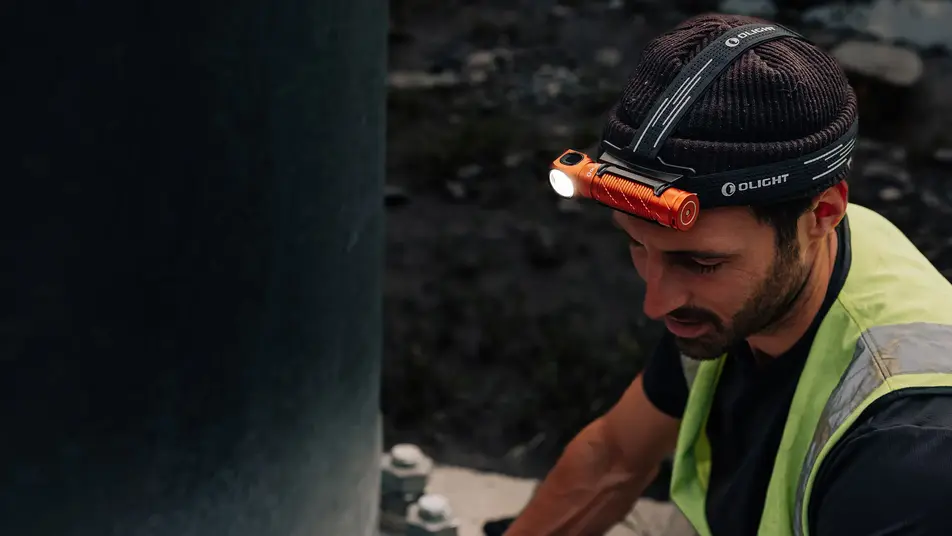
It suits a walker who wants reserve for a descent and can carry the heavier lamp at the front. Try the band over the hat you’ll wear and check that looking down at a step doesn’t make the torch slip. The 160 m rated peak is handy when comparing reach for a brief look across open ground. On a well-defined path, start at Medium and raise the output when the ground or navigation requires it. Perun 3 at Olight UK
Perun 3 Mini for camping and a lightweight spare
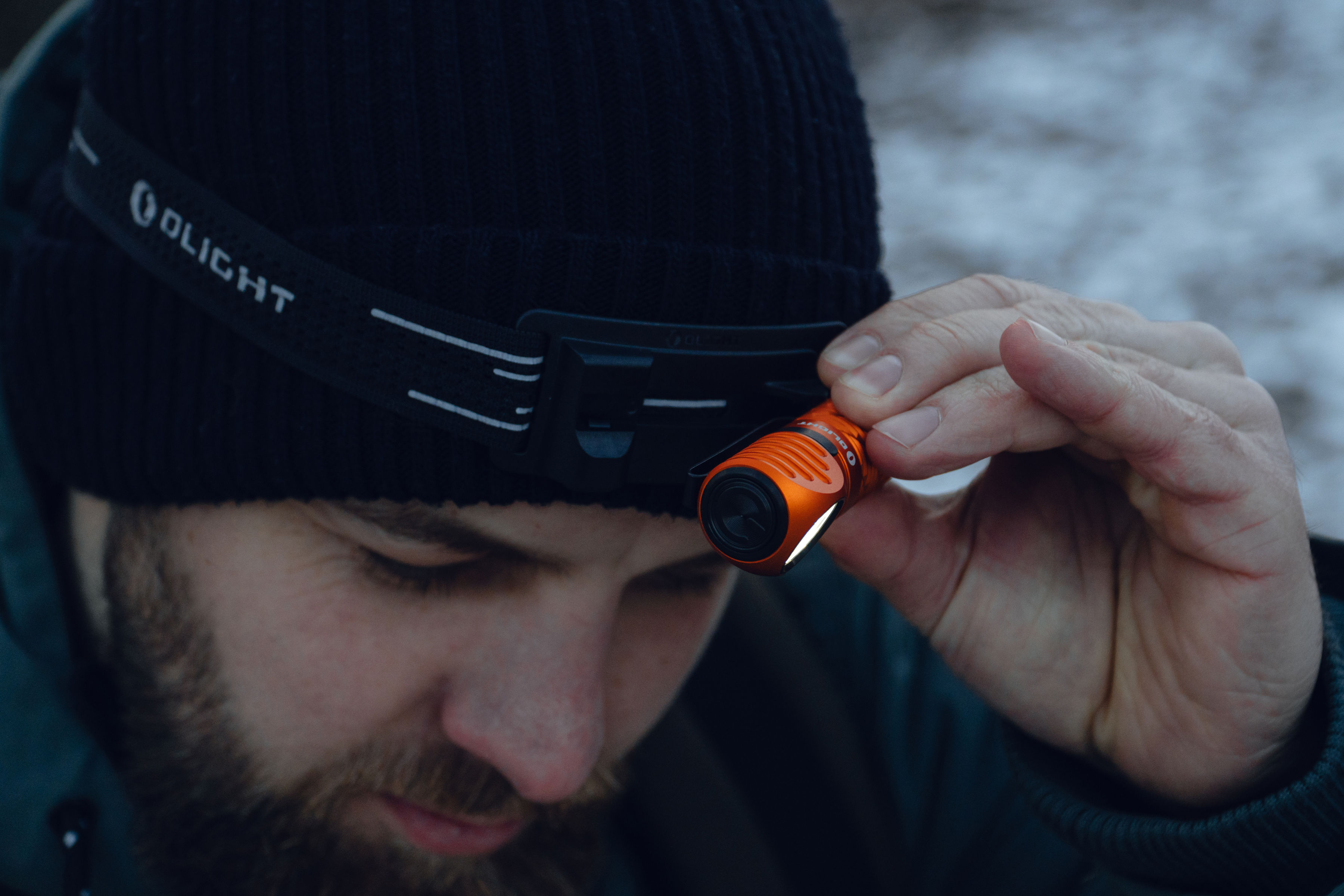
The cool-white Perun 3 Mini puts white and red light in a 54 g torch with a quick-release bracket. Pop it off the band to point the beam under a camp table, then fit it back to pitch the tent with both hands free. The white Low setting is rated at 10 lm for up to 30 hours. Try that setting first when you’re sorting a dry bag beside a tent. Choose white light when you need to distinguish colours, such as reading a map or sorting similar-looking tackle. Perun 3 Mini manufacturer’s manual · Perun 3 Mini at Olight UK
On High, Olight rates the Mini for 500 lm for two minutes followed by about 350 lm for 75 minutes. Medium’s 100 lm can last considerably longer if it suits the route. The figures here are for the standard cool-white torch. The UK page also lists the Premium bundle with a charging case, so check the selected option before ordering. Perun 3 Mini manufacturer’s manual
Array 2 Pro for a rear battery and a choice of beams
The Array 2 Pro keeps its 3,350 mAh battery at the back of the band and the lamp at the front. If a front-heavy torch bounces on your run, try this layout with your usual cap or hood and check how the battery pack and cable sit. Flood alone lights nearby ground. Switch to combined flood and spot when you need more reach around a bend. The physical button selects red or white light. The motion sensor can change brightness and toggle the spot within the white modes. Array 2 Pro UK manual

Olight rates combined High at 1,500 lm for two minutes, then about 390 lm for 188 minutes. Combined Low is rated at 300 lm for 7 hr 30 min. Flood Low runs at 50 lm for 27 hr 30 min and suits slower, close work such as setting up gear. IPX4 covers splashing. For a night fishing spot where you could drop a head torch into the water, the Perun models offer a higher water-resistance rating. Check the UK listing for stock if you need a torch for an upcoming trip. Array 2 Pro UK manual · Array 2 Pro at Olight UK
Choose for the weather, route and time after dark
- Check bounce and balance. Wear the light with the hat or hood you expect to use. Look down, turn your head and jog a few steps on familiar ground. A steady beam is easier to follow on uneven trails. The Mini keeps weight low at the front. The Array 2 Pro spreads weight along the strap.
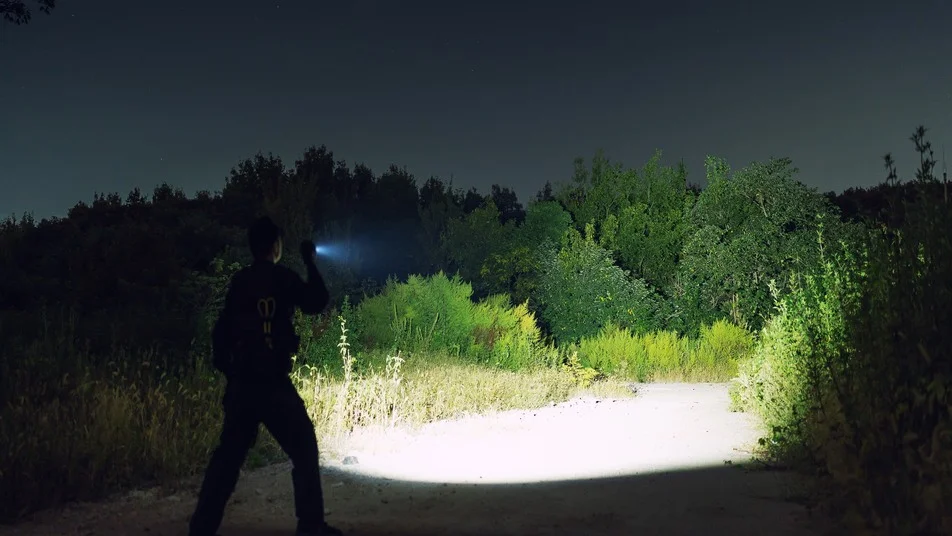
- Match the beam to what you need to see. Use a wider, dipped beam to pick out roots, puddles and mud close to your feet. In mist, try reducing the brightness and tilting the beam down if glare makes the next few metres hard to see. For a distant marker in clear air, briefly raise the beam and use a mode with more reach.
- Work out your time on the mode you’ll actually use. On a 90-minute walk, the Mini’s High test adds up to 77 minutes at its two rated output stages, so it leaves too little headroom if you need that level for the whole route. If 100 lm gives you a clear view on familiar ground, its 4 hr 30 min Medium rating is the more relevant number. For a longer hill descent that needs more light, compare the Perun 3’s High setting and bring a charged spare. Perun 3 Mini manufacturer’s manual · Scottish Mountain Rescue advice
- Allow for rain, cold and charging away from home. Check the water rating and dry the contacts or USB-C port before charging. The Perun manuals report lab runtimes and list a 0–40 °C working range. For frosty outings, check that the expected temperature is within your lamp’s operating range and carry a charged spare. Pack the matching MCC cable for either Perun or a USB-C cable for the Array 2 Pro. Perun 3 manual · Perun 3 Mini manual · Array 2 Pro UK manual
If you’re still deciding what type of head torch suits your kit, start with the UK head torch buying guide.
Frequently asked questions
Which head torch is best for night fishing?
For a wet bank and a compact setup, the Perun 3 Mini gives you low white light for tying knots and red light when you want less light near others. Choose the Perun 3 for a longer session or a walk back that calls for more sustained output. Aim down at your hands when rigging and use white light when you need to identify line or tackle colours.
What’s the difference between IP68, IPX8 and IPX4?
The last digit refers to water protection. The 8 on both Perun models refers to immersion under the specified test conditions. The 6 in IP68 also indicates dust protection. The X in IPX8 or IPX4 leaves the dust rating unspecified. The 4 on the Array 2 Pro refers to splashing. For use near water, check the exact model’s limits and keep the Array’s charging-port cover shut. Perun 3 manual · Perun 3 Mini manual · Array 2 Pro UK manual
Do I need all 3,000 lumens for walking?
On an even, obvious path, try a lower white setting that shows where you can put your feet. Save higher settings for rough ground or a brief check for a marker. If you tend to leave the light on High, use the published High runtime when you plan your trip and check the setting outdoors before relying on it. Mountaineering Scotland head torch advice